
High-performance computing server maker Netweb Technologies reported a more than twofold increase in net profit to Rs 85.32 crore for the first quarter ended June 30, 2026. This significant growth was primarily driven by its AI Systems segment, which contributed over 62% of the revenue. The company also saw its revenue from operations more than double to Rs 819.6 crore, reflecting strong demand and disciplined execution, with a robust order book of Rs 2,507 crore.

Indian Olympic Association (IOA) CEO Raghuram Iyer announced a massive nationwide talent hunt targeting children aged 5 to 15 to identify and nurture future athletes, aiming for 30-40 medals at the 2036 Olympics.
Roads, railways, and coal together are likely to account for 70 per cent of the government's takings from the upcoming second edition of the National Monetisation Pipeline (NMP), set to run from FY26 to FY30. In comparison, these three sectors are estimated to have contributed 66 per cent in the first edition of the NMP - FY22 to FY25.

A NITI Aayog report outlines India's potential to scale its bioeconomy to USD 691 billion by 2035 and USD 2.6 trillion by 2047, creating over 30 million high-value jobs. The report stresses the need for coordinated national execution, regulatory reforms, a strengthened talent pipeline, and a significant BioEconomy Growth Fund to achieve this vision, positioning India among the top biotechnology powers globally.

Haryana and Rajasthan have signed an agreement to implement the 1994 Upper Yamuna River Board (UYRB) agreement, allowing Rajasthan to receive water from the Hathini Kund barrage during monsoons. The pact, signed in the presence of Union Home Minister Amit Shah, resolves a 32-year-old issue concerning water allocation among Yamuna basin states.

Gwadar is viewed as a critical pearl in China's maritime strategy as it would give a permanent logistical footprint near an important choke point - the Strait of Hormuz and the oil rich Persian Gulf, explains Commodore Venugopal Menon (retd).
The Indian corporate bond market witnessed a significant surge, with companies raising nearly Rs 16,000 crore in a single day, primarily led by state-owned financial institutions and NBFCs. This strong momentum, driven by improved borrowing conditions and investor confidence, is expected to persist.

It, however, conceded that 20 per cent blending of ethanol with petrol leads to 3-5 per cent lower mileage in vehicles than conventional petrol, but said the blend offers a significantly higher octane rating, superior anti-knock properties, faster combustion, better pickup, smoother acceleration, and cleaner engine operation.

Despite decades of efforts towards energy transition, oil will remain the critical energy source for all nations for some decades. We can hope for peace opening the Strait of Hormuz, but must prepare for war closing it, points out former foreign secretary Ranjan Mathai.
Adani group companies reported a record capital expenditure of Rs 1.53 lakh crore (USD 16.1 billion) and an all-time high EBITDA of Rs 94,834 crore (USD 10 billion) in the 2025-26 fiscal year, signalling an accelerating infrastructure expansion cycle while maintaining leverage below its stated target.

"With the leverage available, I believe the scheme remains reasonably attractive," said P D Singh, India and South Asia Chief Executive Officer, Standard Chartered Bank, regarding the Foreign Currency Non-Resident (Bank) or FCNR (B) deposits.
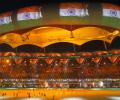
Seventeen sports will feature at the 2030 Commonwealth Games in Ahmedabad, which is set to be staged at around 60 per cent lower cost than previous editions as part of the Commonwealth Sport's revamped hosting model.

Business confidence in India Inc rose to a five-quarter high in December quarter of FY26, amid further reform expectations and steady domestic demand, a survey by industry body Confederation of Indian Industry (CII) showed. The CII Business Confidence Index (BCI) rose for the third consecutive quarter to 66.5 in the December quarter from 66 in the preceding September quarter.

Beijing clearly intends to extend the China-Myanmar Economic Corridor to Bangladesh as part of its larger Maritime Belt and Road Initiative to boost its Indian Ocean presence.
FLO has signed agreements with Garuda Aerospace, NEOSKY India and YRG for a skilling programme to train 1,000 women drone pilots by March next year.

Moving beyond digital payments, the National Payments Corporation of India (NPCI), the operator of Unified Payments Interface, is planning to add more muscle to the country's digital infrastructure by setting up a fourth subsidiary, NPCI Tech Solutions Ltd (NTSL).

'DRDO has been directed to license missile technologies to the private sector.'

The ongoing West Asia conflict is expected to severely impact the supply of affordable housing in India, as rising input costs further erode already thin developer margins. Fluctuations in crude oil and gas prices, coupled with higher freight costs, are driving up prices of essential construction materials like cement and steel, making new projects increasingly unviable for developers.

If one has to compare the tenures of the two prime ministers one must credit Nehru with laying the foundations on which Modi is building a grand edifice, asserts Colonel Anil A Athale (retd).
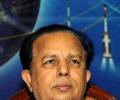
ISRO and TIFR have signed a Memorandum of Understanding to collaborate on space science, technology, and exploration, marking a significant milestone for India's space programme.

An Indian AI Research Organisation official says India has adopted a balanced and pragmatic approach to AI regulation, avoiding the extremes of the US and EU models.

During his first Union Budget in July 2014, former finance minister Arun Jaitley announced the setting up of an institution called 3P India, with an allocation of Rs 500 crore. The intention was to mainstream public-private partnerships (PPPs) in India. The plan was to bring together the capacities of the government and private sector to push PPP projects.

Anil Kumble advises caution on fast-tracking Vaibhav Sooryavanshi to the Indian cricket team, while also discussing India's potential to host the 2036 Olympics and the importance of grassroots sports development.

The Indian government has launched the Urban Challenge Fund (UCF) with a total outlay of Rs 1 lakh crore, aiming to leverage private and market finance for urban infrastructure projects by providing state support in capacity building and credit guarantees.

Former captain Shakib Al Hasan has criticised Bangladesh's absence from the T20 World Cup in India, calling it a 'blunder'. He also expressed hope that bilateral cricket ties could improve with future series.

India's Sports Minister Mansukh Mandaviya is pushing to revive Formula One racing in the country, focusing on creating a strong pipeline of drivers and technicians. Discussions with the Federation of Motor Sports Clubs of India (FMSCI) have centered on developing a comprehensive framework to integrate motorsports with India's automotive and engineering sectors.

India significantly increased piped natural gas (PNG) connections in March as the government accelerates the expansion of cleaner fuel networks amid global supply disruptions.

Egypt, Pakistan, Saudi Arabia and Turkey met in Islamabad in what analysts say is the formal opening of a new diplomatic formation that could reshape the post-war regional order. Their immediate goal is a ceasefire; their larger ambition is to ensure that neither Iran nor Israel emerges from this war in a dominant position. Pakistan's foreign minister then flew directly to Beijing and mooted a Chinese role as guarantor of any eventual agreement. Prem Panicker continues his must read daily blog on the Gulf War.

'The next two to three weeks will not be decided in Washington.' 'They will be decided in Tehran, in whatever calculation Iran makes about the costs of continued resistance against the costs of appearing to have yielded.'

'Within six months I expect petrol, diesel, and electric vehicles (EVs) to reach cost parity,' says Union Minister for Road Transport and Highways Nitin Gadkari.
She said the projects identified are in sectors such as power, railways, urban irrigation, mobility, education and health.
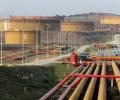
In a significant change to regulations, oil and gas regulator PNGRB has proposed a new policy of how tariffs for pipelines carrying gas to users will be determined, and proposed charging city gas entities selling CNG and piped cooking gas to households at the lowest rates.

Budget 2026 is an intentional and ambitious one - From manufacturing growth to services supremacy, from technology consumption to AI-powered transformation. This is the blueprint for a $7 trillion economy built on intelligence, not just scale.
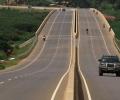
On the back of an aggressive asset monetisation push, the government will press the throttle on the build-operate-transfer (BOT) model - under which private developers fund highway construction - for future highway development, Union Minister for Road Transport and Highways Nitin Gadkari said.

While investors would focus on the results and guidance for the third quarter of financial year 2025-26 (Q3FY26) in the normal course of business, the US-Israeli attack on Iran and the latter's retaliation at Gulf allies of the US has forced them to weigh the consequences of the event.

'If movement remains stalled for three to four months, more than 300,000 recruitments from India could be affected.'

For weeks, the war skirted the edge of catastrophe without tipping over. Missiles flew, there was much destruction, commanders were assassinated, cities across the Gulf and even in Israel struggled to absorb the shock. But one line held: Energy infrastructure, the arteries of the global economy, remained largely untouched. That is no longer true. Prem Panicker continues his must read daily blog on the Gulf War.

A Netherlands cricket board member criticises the ICC's revenue distribution model, arguing it hinders the growth of associate nations.

'When young doctors see limited protection, unpredictable careers and an absence of institutional support, they hesitate.'

The pause gives the US time to breathe, to regroup, to move its expeditionary force into position without risk of interception along the way. It gives Iran nothing -- on the ground, attacks against its infrastructure continue apace. Prem Panicker in his must read daily blog on the Gulf War.
